
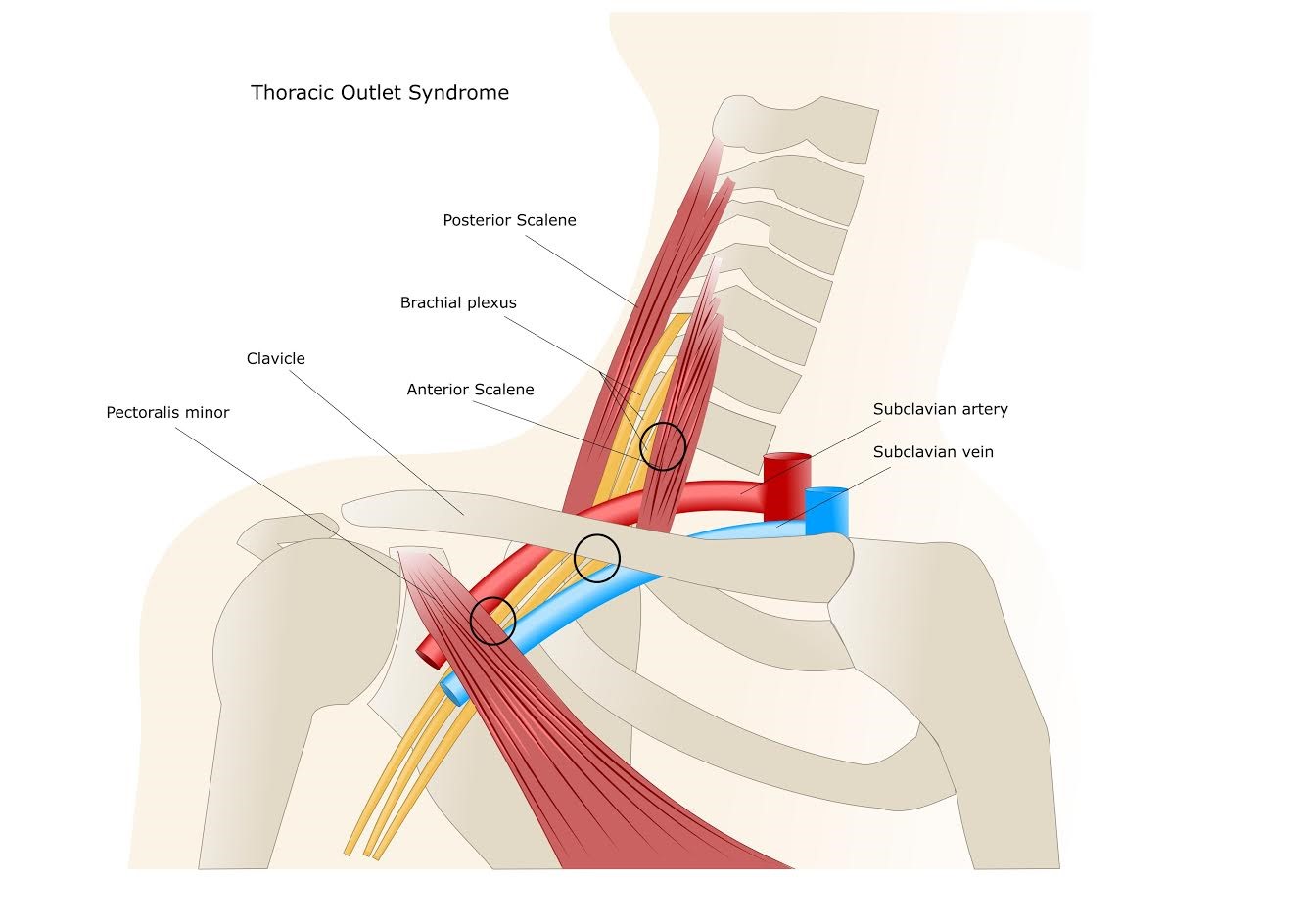
Thoracic outlet syndrome can give you pain in your neck and shoulder region as well as tingling or numbness in your hand. This condition occurs when there is compression in the thoracic outlet—the space between your collarbone and first rib where important nerves and blood vessels pass through to supply your arm.
Understanding the Thoracic Outlet
The thoracic outlet is a narrow passageway where several crucial structures travel from your neck to your arm:
- Subclavian artery: Supplies blood to your arm
- Subclavian vein: Returns blood from your arm to your heart
- Brachial plexus: A bundle of nerves that controls movement and sensation in your upper body and arms
What Causes Thoracic Outlet Syndrome?
The article identifies five primary causes of this condition:
- Poor postural habits: Slouching, forward head posture, and rounded shoulders
- Traumatic injuries: Car accidents, falls, or other trauma to the neck and shoulder region
- Repetitive activities: Activities like typing, overhead movements, or repetitive arm motions
- Inherited skeletal abnormalities: An extra rib (cervical rib) or unusually tight fibrous bands
- Excessive joint stress: From being overweight or carrying heavy loads regularly
Who's at Risk?
This condition more frequently affects females and typically emerges in individuals aged 20-40 years. If you work at a desk, perform repetitive overhead activities, or have experienced neck trauma, you may be at increased risk.
Recognising the Symptoms
Nerve Compression Symptoms:
- Numbness or tingling in your arm or fingers
- Muscle deterioration in the fleshy base of your thumb
- Weakened grip strength
- Localised pain and discomfort in the neck and shoulder
Vascular Compression Symptoms:
- Discolouration of your hand (pale, bluish tint)
- Swelling in your arm or hand
- Diminished pulses in the affected arm
- Cold extremities
- Rapid arm fatigue during activity
How Can Physiotherapy Help?
At Central Lakes Physio, we offer comprehensive treatment for thoracic outlet syndrome including:
- Muscle release techniques: To relieve tension in the neck and shoulder muscles
- Postural education: Teaching you optimal posture to reduce compression
- Spinal mobilisation: Gentle joint movements to improve mobility
- Targeted exercises: Strengthening and stretching programmes tailored to your needs
- Ergonomic assessments: Optimising your workspace to prevent symptom recurrence
Prevention Strategies
To reduce your risk of developing thoracic outlet syndrome, we recommend:
- Avoiding repetitive motions when possible, taking regular breaks
- Managing your weight to reduce stress on joints
- Limiting heavy bag carrying (avoid heavy shoulder bags)
- Consistent stretching of your neck, shoulders, and chest
- Maintaining shoulder and neck strength through regular exercise
If you're experiencing symptoms of thoracic outlet syndrome, early intervention is key. Our team at Central Lakes Physio can provide a thorough assessment and develop a personalised treatment plan to get you back to pain-free movement.