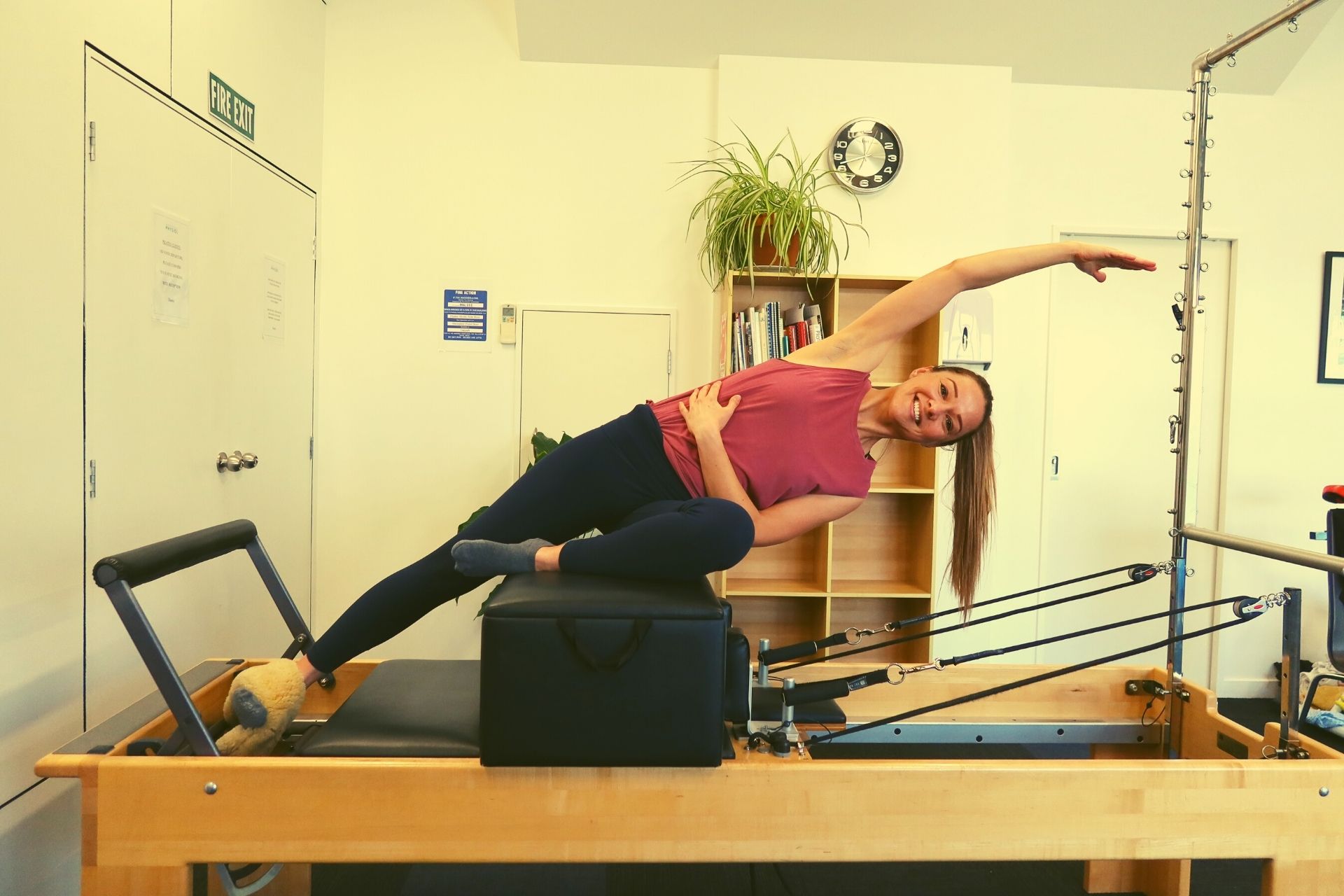
Many visitors to Central Lakes Physio & Pilates express surprise at our studio equipment, which can resemble "medieval torture devices" to the uninitiated. The machinery was developed by Joseph Pilates in the 1920s. During World War I internment in England, Pilates worked with hospitalised soldiers, developing rehabilitation concepts that eventually evolved into the reformer and trapeze table. These machines remain popular in studios worldwide, including our Wānaka clinic.
Why Use Machines Instead of Floor-Based Pilates?
- Springs, bars, and straps provide external resistance for improved muscle activation
- Equipment helps isolate specific movements more effectively than mat work
- Suitable for complete beginners who benefit from positional guidance
- Accessible for individuals with mobility limitations
- Excellent for injury rehabilitation
Equipment Overview
The Reformer
A bed-like frame featuring a rolling carriage with adjustable spring resistance. The platform includes shoulder blocks, a foot bar, and pulleys connected by cords for arm and leg movements.
The Trapeze Table
Resembles a four-poster bed with corner pillars and overhead metal frame. Multiple spring attachment points and a sliding bar enable suspended exercises and countless variations adaptable to all abilities and body types.
The Wunder Chair
A compact box-shaped machine with a split pedal system and adjustable vertical handles. Despite its small size, it accommodates numerous upright and varied position exercises.
Class Format
Classes accommodate a maximum of four participants, with instructors providing individualised programming while rotating attention among attendees. The format allows flexibility for addressing weekly concerns like minor injuries or stress management.